
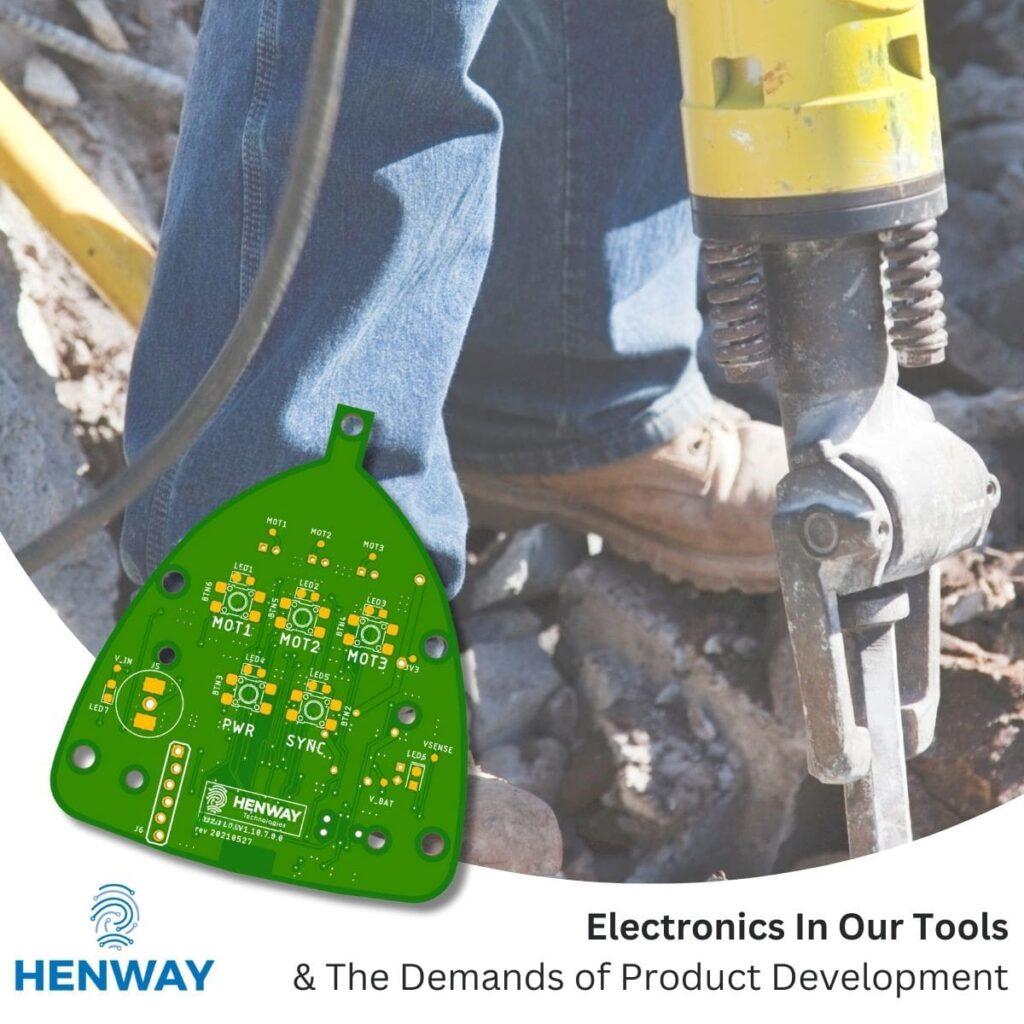
In the past, tool design companies mainly relied on mechanical engineers, but now, with the ever-increasing demand for advanced tools, electronics development expertise has become essential to stay competitive.
Creating smart tools has limitations, and is no longer sufficient; businesses are learning that tools can also contribute to solving larger jobsite challenges. For instance, imagine a tape measure that sends measurements to a printer, generating stickers that can be affixed to cut pieces of wood, enabling workers to cut the pieces more efficiently, stay organized, and overcome bottlenecks in the construction process. The potential for cost-effective solutions, like a digital tape measure/printer combo, is too big to ignore.
However, developing such products requires various EE disciplines. A program manager in our example above needs a hardware, firmware, software, web, and app engineers, as well as manufacturing partners. Without such a team, the product might not meet the expectations of laborers, who are discerning when it comes to tools and quick to criticize subpar products.
As a manager of mechanical engineering projects, challenges lie in estimating production costs for electronics and understanding the pros and cons of each decision in an electronics design project when it’s outside your usual scope. What’s needed is a full-stack EE development team that can quickly come on board and provide guidance from design through production.
Henway is a PCB design and manufacturing company. We understand mechanical engineering teams. We understand the importance of estimating a project’s complexity and production cost before finalizing the requirements. Making everyone well-informed about what lies ahead is necessary to ensuring you have the resources to pull it off. This is why we have developed a framework that sets ME teams on the right path immediately.
For a recent client, we were tasked with estimating the production cost for a PCB containing various motor drivers, rechargeable batteries, charging docks, and user interface components. We began by reviewing their product requirements and examining their CAD models. We provided insights on the shape, motor selections, push buttons, battery size/shape, internal wiring strategies, and production strategy, and we inquired about their production partners, among other aspects. After grasping their objectives and target users, we prepared a detailed spec document for the electronics, encompassing the scope of work, key components, acceptance criteria, and more. Subsequently, we outlined a roadmap with milestones and target deadlines.
If you are managing a custom design project involving custom electronics, let us help you understand the situation by reaching out. We will discuss your concept and then provide you with the guidance you need. Contact us.