
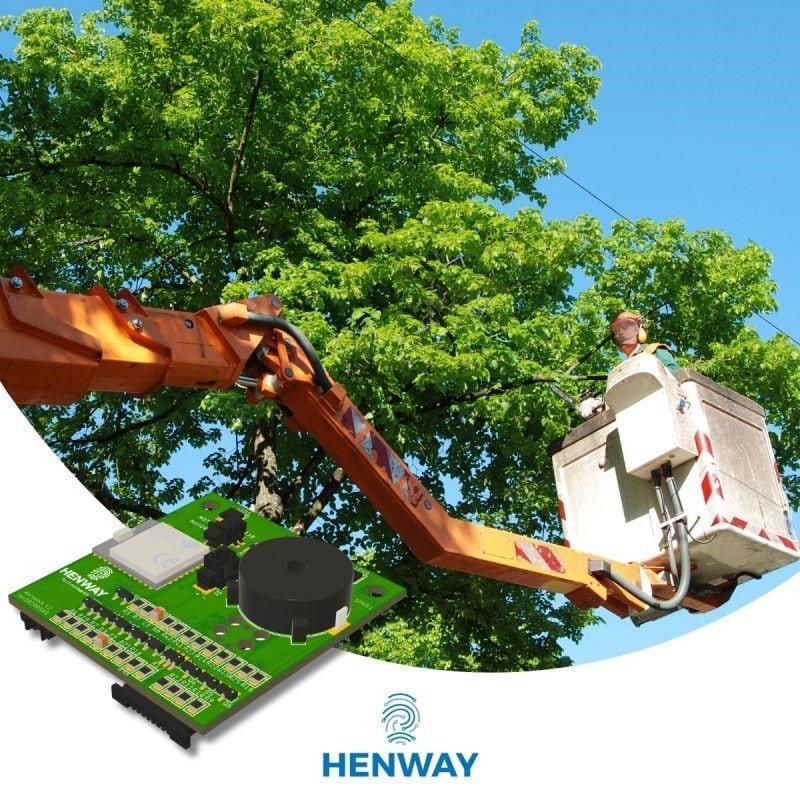
When a lumberjack, product development manager, and CFO came to Henway Engineering, they had a critical mission: to enhance the safety of tree removal operations in heavy traffic areas.
The company, a large national tree removal service company, was aware of the dangers involved in tree removal, particularly in densely populated urban environments where clearing trees near telephone lines and other infrastructure is a common task. The challenge was to find a better way to protect the crew and bystanders than the traditional use of traffic cones, which often go unnoticed by pedestrians, vehicles, animals, and, most recently, kids on bikes.
The lumberjack at the meeting, who serves as the “spotter” or “safety spotter” during tree removal operations, shared stories of near-misses and accidents within drop zones that could have been avoided. He explained that his role is to monitor the surroundings and alert the crew when there’s a breach in the safety zone, but the noisy environment—filled with the sounds of chainsaws, wood chippers, and the use of headphones —makes it difficult for the crew to hear verbal warnings, especially when they’re in bucket trucks.
When I was younger, I worked as a groundsman for a tree removal company from the ages of 8 to 18, so I understood everything this man was telling me and knew how to help.
Part One: The Wearable Alarm Device
The wearable is designed to be worn comfortably by every crew member. If there’s a breach in the area-wide protection zone, the wearable triggers an audible, visual, and vibratory alarm, alerting everyone to potential danger. It then falls to the spotter to assess the situation and clear the alarm once the threat has been managed. The breach signal can be triggered by a button on the wearable or by a custom-made motion sensor using Doppler radar, which is part 2 of this post.
The wireless technology chosen for the system was Bluetooth 5.0, with mesh networking capabilities. The benefits of mesh networking in this product are twofold. First, mesh networking allows the customer to achieve the maximum possible range since the signal gets repeated by each wearable in the area, boosting the signal. Another, is to alleviate the crew member from the responsibility of connecting to a network without forgetting. With mesh networking, it’s possible to program things such that the device automatically pairs when they roll up to the job site.
The UI features high-brightness Cree LEDs on a metal core PCB for visibility alerts, a powerful vibrating motor, and a loud piezo buzzer to ensure the alert is noticed even in the noisiest environments. The wearable also includes a Qi-compliant wireless battery charging circuit and a custom-made USB cradle for charging. The membrane keypad, has large buttons with heavy-duty tactile feedback that the crew member can feel through the leather gloves. The wearable’s battery can last for months under regular use.
Part 2: The Doppler Radar Sensor (coming tomorrow)