
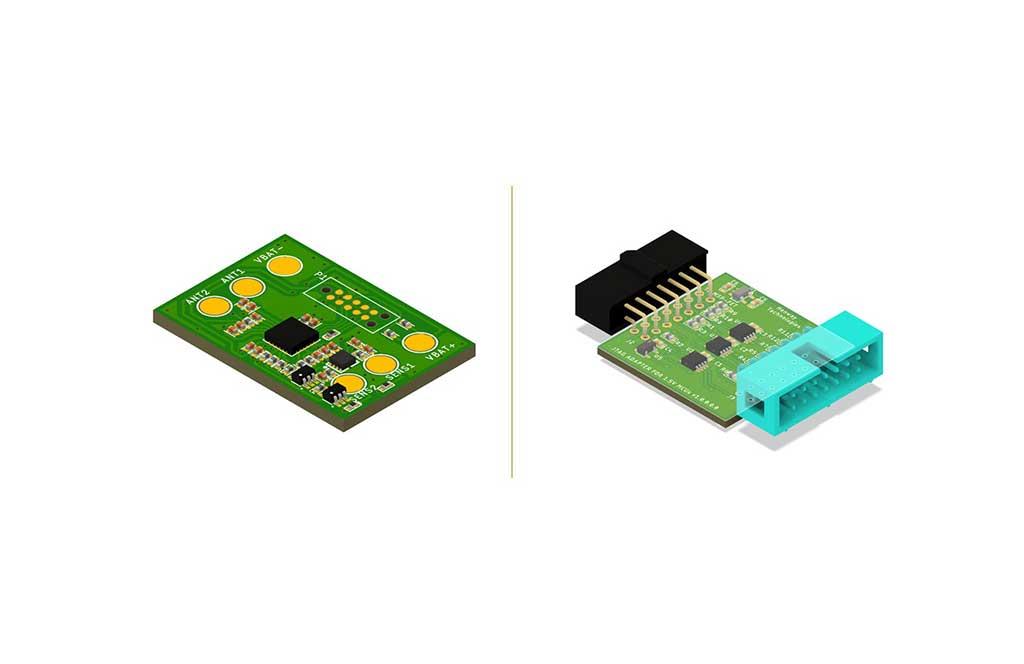
Outsourcing is about speed, expertise, and flexibility. A consultancy brings a bullpen of experts who brainstorm when a project stalls and swap in the right specialist the moment you need RF, firmware, sensors, or math-heavy features – without you carrying full-time headcount. You should consider in-house PCB design or PCB firmware development only if you need continuous, ongoing design changes after launch and want to build a permanent internal capability.
Comparison Table
| Dimension | Design Partner (Henway) | In-House Hire | Hybrid |
| Speed to start | Start as soon as scope is set; workflows ready | 8–12+ weeks to recruit, vet, onboard | Partner now, hire later |
| Cost model | Pay for what you need (fixed scope or hourly) | Salary + benefits + tools + lab | Blend: fixed + internal hours |
| Depth of expertise | Bullpen: RF/BLE/Wi-Fi, sensors, firmware, DFM, test | 1–2 people; skill gaps likely | Partner fills gaps |
| Management | PM keeps roadmap, holds engineers to PRD | You manage processes & discipline | Shared cadence |
| Tools & infra | Altium + production-proven libraries; test gear; supplier network | Buy CAD, set up libraries, benches, vendors | Keep core tools, lean on partner gear |
| Scalability | From PRD → proto → assembly → production | Still need external fab/assembly | Best-of-both |
| IP & handoff | NDA, native files, version-controlled repos | Full internal control | Formal handoff plan |
| Communication | Weekly 30-min: wins, blockers, budget, timeline | Your process | Joint cadence |
Time-to-value and TCO: simple math
In-house monthly TCO (illustrative):
Salary/12 (e.g., $120k/yr ≈ $10k/mo) + benefits/taxes (≈ 20–30%) + CAD licenses + benches/test gear + management overhead.
Partner monthly TCO (illustrative):
Henway full-time engagement ≈ $10k/mo for a managed team that swaps in specialists exactly when needed (RF today, firmware tomorrow).
Worked example (first 3 months):
| Cost Element | In-House (3 mo) | Design Partner (3 mo) |
| Engineer comp + benefits | $36,000–$39,000 | — |
| CAD licenses + setup | $3,000–$8,000 | — |
| Benches/test gear | $5,000–$20,000 | — |
| PM/overhead time | Real but hard to price | Included in engagement |
| Partner fees | — | $30,000 |
| Total (est.) | $44k–$67k | $30k |
Your reality varies by scope; this is a directional anchor for budgeting.
The bullpen advantage (and why it matters)
Most companies can afford one electrical engineer. A consultancy fields many, plus a project manager who keeps the engineer aligned to the written requirements (PRD) and updates the roadmap when good ideas shift scope – without you herding cats. When you hit an RF snag or need a quick firmware spike, you get that specialist for that block – no retraining, no delay.
Peer reviews reduce avoidable mistakes. Fresh eyes at each gate (schematic, layout, DFM, firmware interfaces) dramatically lower the risk of “we should have caught that” errors a solo engineer might miss when fatigued or juggling multiple projects.
Tooling, libraries, and version control
- CAD: Altium with production-proven library elements (known-good footprints, stacks, templates).
- Version control: Hardware and firmware are version-controlled with traceable change logs.
- Supplier network & lab gear: Access to inspection, programming, and test equipment; established vendor relationships.
Result: faster first-time-right boards and repeatable handoffs your team can build on.
Communication that reduces surprises
Default cadence: a weekly 30-minute engineer-to-engineer call covering wins, blockers, budget burn, and timeline. Tickets are tracked; action items documented. If you’re up at night about something, we want it on the agenda.
What you get at handoff
You own the work. Under NDA, we deliver:
- Native CAD (schematic + PCB), PDF schematic, BOM, Gerbers
- README / programming instructions (aligned to your DVT checklist)
- Fully documented source code and version history for traceability
If you later hire in-house, we plan a 2–4 week transition with knowledge transfer, library orientation, bring-up notes, and test fixture documentation.
Typical scopes, hours, and where the time goes
| Phase | Typical Hours | What’s Included |
| Phase 1: Project Requirements (PRD) | ~40 h | Goals, constraints, user profile, risk register, roadmap |
| Hardware Development | 80–200 h | Schematic, layout, DFM/DFA reviews, libraries |
| Block Testing / HW Validation | ~40 h | EVT bring-up, measurements vs requirements |
| Firmware | 0–300 h | MVP (power-on/core function) → application features |
Ranges vary with complexity, mechanical constraints, and part availability.
When in-house makes sense (and when hybrid wins)
- Go in-house if your roadmap requires continual iteration post-launch and you want to build a permanent capability.
- Start with a partner if you need speed to prototype/production and on-demand specialists.
- Hybrid once you scale: keep Henway for assembly/production, test fixtures, and surge capacity while your new hire learns the product.
FAQs
Do we lose IP if we use a partner?
No. Under NDA, you own native design files and source. We operate U.S.-based with clear access control.
How soon can we start?
As soon as scope is set. No recruiting lag.
What will weekly communication look like?
A 30-minute cadence: wins, blockers, budget, timeline—with tickets and action items tracked.
Is a partner more expensive than hiring?
Often less in the first 3–6 months when you factor recruiting delay, benefits, licenses, gear, and managerial overhead.
Can you work with our new in-house engineer later?
Yes. We do hybrid transitions and continue as your assembly/production partner.