
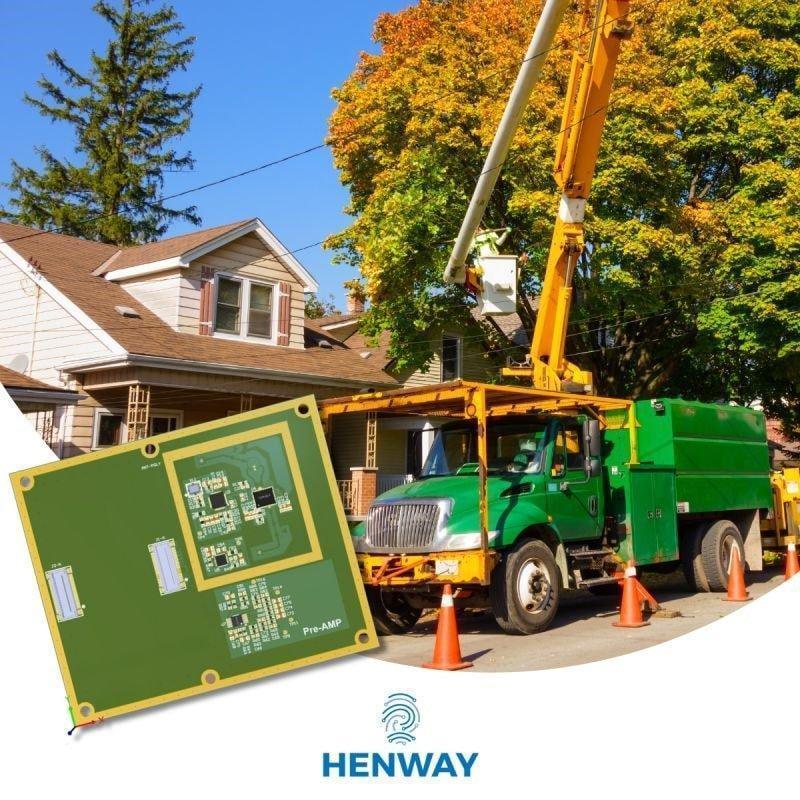
When a lumberjack, product development manager, and CFO came to Henway Engineering, they had a critical mission: to enhance the safety of tree removal operations in heavy traffic areas.
The company, a large national tree removal service company, was aware of the dangers involved in tree removal, particularly in densely populated urban environments where clearing trees near telephone lines and other infrastructure is a common task. The challenge was to find a better way to protect the crew and bystanders than the traditional use of traffic cones, which often go unnoticed by pedestrians, vehicles, animals, and, most recently, kids on bikes.
The lumberjack at the meeting, who serves as the “spotter” or “safety spotter” during tree removal operations, shared stories of near-misses and accidents within drop zones that could have been avoided. He explained that his role is to monitor the surroundings and alert the crew when there’s a breach in the safety zone, but the noisy environment—filled with the sounds of chainsaws, wood chippers, and the use of headphones —makes it difficult for the crew to hear verbal warnings, especially when they’re in bucket trucks.
When I was younger, I worked as a groundsman for a tree removal company from the ages of 8 to 18, so I understood everything this man was telling me and knew how to help.
Part One: The Wearable Alarm Device (See yesterday’s post)
Part Two: Part 2: The Doppler Radar Sensor
In the project’s second phase, we created a custom Doppler motion sensor that can detect movement around the base of the removed tree, known as the drop zone. This area is where falling branches and logs can pose a safety risk. The sensor will immediately alert the crew and, most importantly, the chainsaw operator if anyone enters this hazardous area, allowing them to stop their work and prevent accidents.
The sensors wrap around a tree like an adjustable Velcro belt for full 360-degree coverage.
This custom-made Doppler’s software and antenna is highly advanced. It can filter out small objects and objects moving away from the sensor. It can also differentiate between fast and slow-moving objects and objects at varying distances.
After conducting many real-world experiments and tweaking the settings, our technology could successfully detect people and pets of various sizes within the designated area while effectively eliminating sources of excessive false positives.
The customer is so pleased with the electronics’ robustness and ease of use that they are exploring its application in new markets such as roofing and building restoration. We are looking forward to witnessing their success!
This project is a perfect example of Henway Engineering’s commitment to solving real-world safety challenges with innovative technology. We are moved by our customer’s mission and inspired to create things that make a tangible difference in the safety of our workforce.